
More families want aging in place. They also want safety. The hard part is doing both. Cameras can feel like someone is watching. Wearables only help if a person remembers to put them on. That is why Wi-Fi monitoring, sensing, and other passive sensors are growing so fast in smart home healthcare. It now provides safer days at home without cameras, and who doesn’t like that?
This kind of IoT home monitoring uses the wireless signal already in the house. When a person moves, the signal changes a little. Software can turn those changes into simple clues: Did someone get out of bed? Has the kitchen been quiet too long? Did bathroom trips jump this week? It is not magic. It is pattern-watching. And it is becoming a core piece of connected home care and remote patient monitoring.
Why Families Look for Non-intrusive Monitoring
Traditional tools wait for a crisis. A pendant helps after a fall. A camera shows a room, but many older adults refuse it. Privacy-first monitoring tries a different path. Good non-intrusive monitoring can:
- Watch activity, not faces or voices
- Learn a normal routine
- Flag a change before it becomes an emergency
- Send a note to a caregiver app
- Support fall detection and inactivity alerts without a wristband
- All done without personal invasion, privacy breaches, and without cameras
AARP has found that most adults 50 and older hope to stay in their own home as they age. “Medical emergency response systems and home safety features (doorbell and surveillance cameras) topped the list of tech older adults expect to install in their homes to safely age-in-place.” Tech that respects dignity is always more likely to be used.
How Wi-Fi Motion Works in Plain English
Think of Wi-Fi like invisible ripples in a pond. Walking through a room stirs the ripples. Wi-Fi Motion (a type of ambient sensing) reads that stir.
What it can notice:
- Morning rise time
- Movement between bedroom, kitchen, and bath
- Long stretches with no motion
- Week-long shifts in sleep or activity
What it should not do:
- Record video
- Record conversations
- Read texts, browsing, or passwords
That last part matters. People will not keep a system they do not trust
The Expected Impact Over the Next Ten Years
Analysts who track Wi-Fi sensing for elderly care put the market near $1.8 billion in 2025. They expect it to reach about $9.2 billion by 2034, growing close to 20% a year. Home care is one of the fastest-growing parts of that story, because so many older adults live in the community, not in a facility. Also, remote patient monitoring is rising with hospital-at-home programs. One 2026 forecast sees global RPM growing from about $30.9 billion in 2026 to $110.7 billion by 2033. Ambient tools like Wi-Fi sensing sit beside wearables in that shift: less “clip this on,” more “the house notices a change.” If Wi-Fi sensing for elder care keeps a similar growth path, a simple 10-year picture from 2026 looks like this:

That chart is an illustration based on published growth rates, not a promise. Real homes still need solid Wi-Fi, clear alerts, and a person ready to call back.
Where Addison Aware from Electronic Caregiver Fits
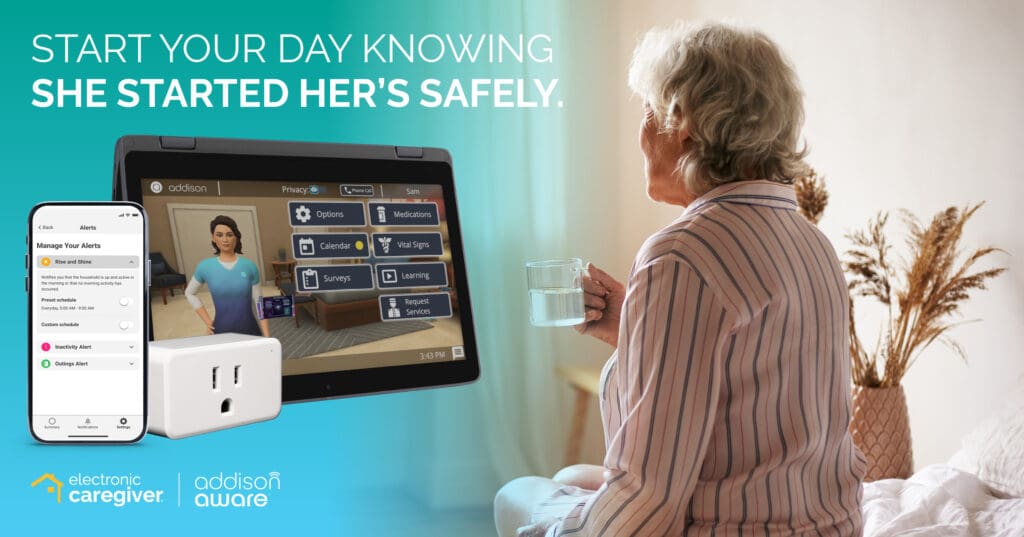
One product in this lane is Addison Aware from Electronic Caregiver. It is built as privacy-first Wi-Fi sensing. Small devices plug into outlets in key rooms. They use Wi-Fi Motion to learn daily patterns and surface changes, not a live video feed. Addison Aware can:
- Send rise-from-bed or fail-to-rise notices
- Flag long inactivity
- Show simple weekly trends for sleep, kitchen use, and bathroom use
- Work through an iOS or Android caregiver app
- Run without cameras, microphones, or a wearable
Customers and care partners tend to like the “set it and forget it” feel. Setup is closer to plugging in night-lights than hanging cameras. Families get a check-in layer between in-person visits. Additionally, Seniors keep more of their normal life. That is the soft win: awareness without a spotlight.

Just the Wi-Fi Monitoring FAQS
What is Wi-Fi home monitoring?
Wi-Fi home monitoring uses the wireless signal already in a house to notice movement and daily patterns. When someone walks from the bedroom to the kitchen, the signal changes a little. Software turns that change into a simple alert or a weekly trend. It is not the same as a security camera.
Does Wi-Fi home monitoring use cameras?
It does not have to. Camera systems record pictures. Wi-Fi sensing watches activity, not faces. Products like Addison Aware from Electronic Caregiver are built with no cameras and no microphones.
Can it work if the person will not wear a bracelet?
Yes. That is one reason families look at it. A pendant only helps if it is on. Outlet-based Wi-Fi devices keep working in the rooms where they are plugged in.
What kinds of alerts do families usually get?
Common alerts include “did not get out of bed,” long inactivity, and unusual quiet in the kitchen or bathroom. Weekly views can show sleep and routine shifts. The best systems send a check-in prompt, not a flood of noise.
Is this the same as remote patient monitoring?
They overlap, but they are not the same. Remote patient monitoring often tracks vitals like blood pressure. Wi-Fi home monitoring tracks presence and routine. Together they can support aging in place. Wi-Fi sensing by itself is not a doctor visit and not a full medical device for every condition.
More FAQS
Does it record Wi-Fi passwords, texts, or browsing?
A well-designed system should not, therefore ask the company, in writing, what is collected. Look for: no video, no audio, no reading of personal internet use.
What does the home need for it to work well?
A steady Wi-Fi signal in the rooms that matter, power outlets in those rooms, and a person who will answer the caregiver app. Dead zones and ignored alerts make any system weak.
Can it replace a caregiver or a medical alert button?
No. It is an extra layer between visits. Keep a way to call for help in a true emergency.
How is Addison Aware different from a smart camera?
Addison Aware uses Wi-Fi Motion to learn normal days and flag a change. Families get rise-from-bed notices, inactivity alerts, and simple weekly trends through a phone app. The pitch is awareness without a live video feed.
Will Wi-Fi home monitoring keep growing?
Demand for aging-in-place and non-intrusive tools is rising. Market reports on Wi-Fi sensing for elder care point to strong growth this decade. Growth does not mean every product is right for every home. Compare privacy, setup, and who gets the 8 a.m. alert.
The Simple Takeaway
Aging in place will keep pushing smart home healthcare forward. The tools that last will be the ones people will actually leave plugged in. Non-intrusive Wi-Fi sensing is growing because it asks less of the person in the house. If you are comparing options, look for no cameras, clear alerts, weekly trends, and a real human backup. Addison Aware is one example built around those ideas. The next ten years will likely bring more of this ambient sensing into everyday connected home care; not to watch people, but to notice when their today no longer looks like their yesterday. And that’s a good thing.